2026 Top Aloin Powder Types for Global Buyers?
The 2026 market for Aloin Powder demands more than a simple purity percentage. Global buyers now compare botanical identity, extraction method, regulatory status, and batch consistency. Aloe species, plant part, and processing temperature can change the final aloin profile. The same beige powder may perform differently under laboratory testing.
The World Health Organization’s Monographs on Selected Medicinal Plants highlight Aloe’s chemical variability and the importance of authenticated raw materials. EFSA’s scientific opinion on hydroxyanthracene derivatives also raised safety concerns for certain aloe constituents in food supplements. These findings make regulatory screening essential, especially for buyers serving European markets. The U.S. FDA has also treated aloe-derived stimulant ingredients with caution in over-the-counter drug regulations. Compliance cannot be assumed from a supplier’s marketing brochure.
This guide examines major Aloin Powder types expected to attract global purchasing attention in 2026. It considers natural aloe latex powder, purified aloin fractions, standardized grades, and laboratory-oriented materials. Each type requires different documentation. Buyers should request HPLC chromatograms, a current certificate of analysis, microbiological results, heavy-metal testing, and full supply-chain traceability. Small details matter. A missing botanical name can weaken an otherwise impressive specification sheet.
No universal ranking fits every application. That is an uncomfortable limitation. A high-assay grade may suit analytical work but create added regulatory challenges in consumer products. Meanwhile, a lower-cost powder may hide variation between harvests. Reliable sourcing therefore depends on technical verification, not price alone. The following comparison helps purchasing teams assess quality, risk, and practical suitability with greater confidence.
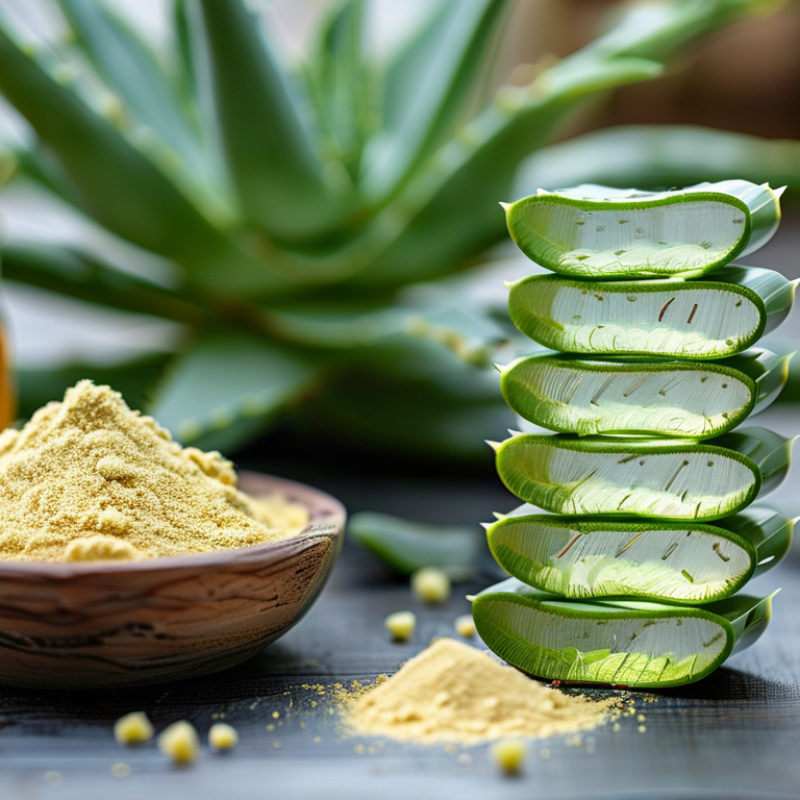
Aloin Powder: Definition, Sources, and Core Characteristics
2026 Top Aloin Powder Types for Global Buyers?
Aloin powder is a concentrated botanical ingredient derived from aloe latex. It mainly contains aloin A, aloin B, or a measured combination of both. Aloe latex comes from the yellow sap beneath the leaf skin, not the clear inner gel. That difference matters. Latex is usually collected, dried, and milled under controlled conditions. Aloe species, growing conditions, and extraction methods can change the final profile.
Common powder types differ by aloin ratio, assay level, particle size, and processing method. Some materials appear pale yellow, while others look amber or brown. The powder may have a bitter odor and can react to moisture, heat, or strong light. These are useful practical observations, but appearance cannot confirm identity. A reliable specification should include HPLC testing, moisture limits, residual solvent data, microbial results, and contaminant screening.
Global buyers should request a current certificate of analysis and batch traceability. The botanical name and plant part should be clearly stated. This is often overlooked. Packaging should protect the powder from humidity and direct light. Different markets may restrict aloin in foods, cosmetics, or other applications, so regulatory review is essential before purchase. Even experienced buyers can misjudge quality when they rely only on assay numbers. Source records, storage conditions, and independent verification provide stronger evidence.
2026 Top Aloin Powder Types for Global Buyers
Aloin Powder: Definition, Sources, and Core Characteristics
Aloin is a naturally occurring anthraquinone C-glycoside mainly associated with the latex of Aloe species, including Aloe vera and Aloe ferox. The two principal molecular forms are aloin A, also called barbaloin, and aloin B, also called isobarbaloin. Both forms have the same molecular formula, C21H22O9, and the same molecular weight of approximately 418.39 g/mol, while differing in stereochemical configuration. For global purchasing, specifications should clearly state the aloin form, botanical source, assay method, and whether the powder is standardized to individual or total aloin.
Chart values represent the number of carbon, hydrogen, and oxygen atoms in one molecule of each aloin form. Molecular data are consistent with the stated formula C21H22O9.
Key Differences in Purity, Color, Solubility, and Processing
2026 Top Aloin Powder Types for Global Buyers
Aloin powder is commonly compared by assay, appearance, solubility, and processing history. High-purity grades may offer a cleaner analytical profile, but they are not always the best choice for every formula. Buyers should request an HPLC test, moisture data, residual solvent information, and batch-specific specifications. Purity labels can mislead when testing methods differ. Confirm the analytical basis before comparing quotations.
Color also reveals processing, although it is not proof of quality. Pale yellow powder may indicate decolorization or refined filtration. Darker yellow to brown material can reflect natural compounds, oxidation, or uneven drying. Solubility depends on particle size, temperature, pH, and the final solvent system. A powder that disperses quickly in warm water may form sediment after cooling. That detail matters in production. Processing methods such as drying temperature and milling can change flowability and stability.
Tips: Ask for a retained sample and test it under your actual mixing conditions. Compare appearance in daylight, not only in catalog images. Check whether the supplier explains processing controls clearly. If the powder performs differently between batches, investigate storage and packaging before changing the formula. A lower price may hide weaker consistency. Local rules also vary, so confirm whether the intended application permits aloin ingredients in your market.
Global Standards for Aloin Powder Quality, Testing, and Safety
2026 Top Aloin Powder Types for Global Buyers?
Global buyers should separate purified aloin A, aloin B, and aloe-latex-derived powders before comparing prices.
These materials can differ in concentration, color, moisture, and botanical impurities. Quality begins with traceable cultivation, controlled extraction, and a documented batch number. The European Food Safety Authority’s 2018 scientific opinion reported genotoxicity and carcinogenicity concerns for hydroxyanthracene derivatives, including aloe-related compounds. Therefore, a high assay value does not automatically mean a safer product. It may even increase regulatory attention.
Testing should follow a risk-based plan.
Use HPLC or UPLC for identity and assay, with reference standards for aloin A and B. Confirm method suitability under ICH Q2(R2), including specificity, accuracy, precision, and detection limits. An ISO/IEC 17025-accredited laboratory adds useful confidence, but accreditation alone cannot correct weak sampling. Test moisture, total ash, heavy metals, pesticide residues, residual solvents, microbial counts, and undeclared botanical adulterants. USP General Chapter <621> provides relevant chromatography principles. Local food, cosmetic, or pharmaceutical rules may still differ.
Tips:
Request a recent certificate of analysis, chromatograms, uncertainty data, and the full test method. Check whether the sample came from the same production lot. One weakness remains common: buyers often trust one percentage result too quickly. That is not enough. Storage records matter, because heat, light, and humidity can change powder performance. A cautious review may delay purchasing, but it can prevent a costly compliance failure.
How to Select and Purchase the Right Aloin Powder Type
2026 Top Aloin Powder Types for Global Buyers?
How to Select and Purchase the Right Aloin Powder Type
Aloin powder is not one uniform commodity. Buyers should distinguish aloin A, aloin B, mixed aloin, and standardized aloe latex powder. Each type can differ in assay, color, solubility, and intended technical use. A 2024 Grand View Research assessment projects the broader aloe vera market to grow at about 7.6% annually through 2030. That growth may increase supply, but it does not guarantee consistent aloin quality. Choose the specification before comparing prices.
Request a current certificate of analysis for every batch. It should show HPLC identity, assay percentage, moisture, ash, microbiological limits, heavy metals, pesticides, and residual solvents. Ask whether testing was completed by an ISO/IEC 17025-accredited laboratory. The WHO Monographs on Selected Medicinal Plants describe aloe latex as a distinct botanical material, so source documentation matters. Confirm the plant part, extraction solvent, drying method, and batch traceability. Small details matter.
For international purchasing, check the destination market’s rules before placing an order. Requirements can differ for research, cosmetics, manufacturing, and other regulated applications. Do not assume “natural” means unrestricted. A low price may reflect weak testing, unstable storage, or unclear origin. I would also verify light-protective packaging, desiccant use, and retest dates. One practical weakness remains: supplier documents can look complete while missing chromatographic raw data. Request representative samples, compare them with the specification, and record deviations before approving a larger shipment.