How to Source Bovine Hydrolysed Collagen for Your Business?
In the evolving landscape of health and wellness, sourcing quality ingredients is paramount. Bovine Hydrolysed Collagen has emerged as a cornerstone in the dietary supplement industry. Dr. Emily Carter, a leading expert in collagen research, once stated, “The potential of Bovine Hydrolysed Collagen in promoting joint health and skin elasticity is significant.” This underscores the importance of selecting the right sources for businesses venturing into this market.
Many companies encounter challenges in finding reliable suppliers. It's essential to assess the quality of the collagen, including its sourcing and processing methods. Sustainable practices and transparency should be non-negotiable criteria in supplier selection. Nevertheless, the overwhelming number of options can lead to confusion.
Bovine Hydrolysed Collagen is not just a trend; it represents an industry shift. Brands must navigate these waters carefully. Innovation and authenticity are crucial in meeting consumer demands. Reflecting on the sourcing journey is vital for continuous improvement and success.

Understanding Bovine Hydrolysed Collagen and its Benefits for Business
Bovine hydrolysed collagen is a popular ingredient in health and beauty products. It is derived from cow hides and bones, making it a rich source of protein. Many businesses are now incorporating it into supplements and cosmetics. The benefits are significant; collagen supports skin elasticity and joint health. It has become a go-to for those seeking anti-aging effects.
However, sourcing bovine hydrolysed collagen can be challenging. Not all suppliers provide high-quality products that meet safety standards. Businesses must conduct extensive research. They should verify suppliers’ practices and certifications. This ensures that the collagen is ethically sourced and processed. Transparency in sourcing is vital for building trust with customers.
While the demand for this ingredient continues to rise, it’s essential to navigate the market carefully. Some products may contain additives or fillers that dilute their effectiveness. It is crucial to assess the purity of the collagen. Testing samples before committing to large orders can prevent potential issues. Understanding the specific needs of your target market helps in making informed decisions.
Identifying Reliable Suppliers for Bovine Hydrolysed Collagen
When sourcing bovine hydrolysed collagen, finding reliable suppliers is crucial. Start by researching the market. Look for suppliers with industry experience and a strong reputation. Check their certifications and quality control processes. This ensures the collagen meets health and safety standards.
Reach out to potential suppliers. Ask for samples to evaluate the product's quality. Pay attention to texture and solubility. These factors influence performance in your products. Transparency is vital. Suppliers should provide clear information about sourcing and production methods.
Building a relationship with suppliers can be beneficial. Have open discussions about your needs. It’s important to maintain communication for ongoing support. Sometimes, suppliers may not meet expectations in terms of product consistency. Regular feedback helps improve quality. Explore different options until you find a reliable partner.
Evaluating Quality Standards and Certifications of Collagen Products
When sourcing bovine hydrolysed collagen for your business, evaluating quality standards is crucial. Certifications provide insight into the product's safety and efficacy. Look for certifications from reputable organizations. These often include Good Manufacturing Practices (GMP) and ISO certifications. Such standards demonstrate that the collagen is produced in a controlled environment, ensuring reliability.
Quality can vary widely. Not all collagen products are created equal. It's essential to check for third-party testing results. These tests confirm the absence of contaminants and validate the ingredient's potency. Additionally, consider the sourcing practices of suppliers. Ethical sourcing not only benefits your business reputation but also enhances product quality.
Be aware of terms like "hydrolysed" or "collagen peptides." They indicate different processing levels, affecting bioavailability. This is where understanding the product details becomes essential. Transparency from suppliers is a sign of quality. If a supplier is evasive about their sourcing or testing, it may raise red flags. Engage in conversations to assess their knowledge and commitment to quality.
How to Source Bovine Hydrolysed Collagen for Your Business? - Evaluating Quality Standards and Certifications of Collagen Products
| Quality Standard |
Description |
Certification Body |
Relevance to Bovine Hydrolysed Collagen |
| ISO 9001 |
Quality management systems |
International Organization for Standardization |
Ensures effective quality management in manufacturing processes |
| HACCP |
Hazard Analysis Critical Control Point |
Various Accredited Certifying Bodies |
Identifies and mitigates risks within production processes |
| GMP |
Good Manufacturing Practice |
FDA, EMA |
Ensures products are consistently produced and controlled |
| Kosher Certification |
Meets Jewish dietary laws |
Various Kosher Certifying Agencies |
Validates compliance for consumers requiring kosher products |
| Halal Certification |
Meets Islamic dietary laws |
Various Halal Certifying Agencies |
Ensures product compliance for Muslim consumers |
Negotiating Pricing and Terms with Suppliers
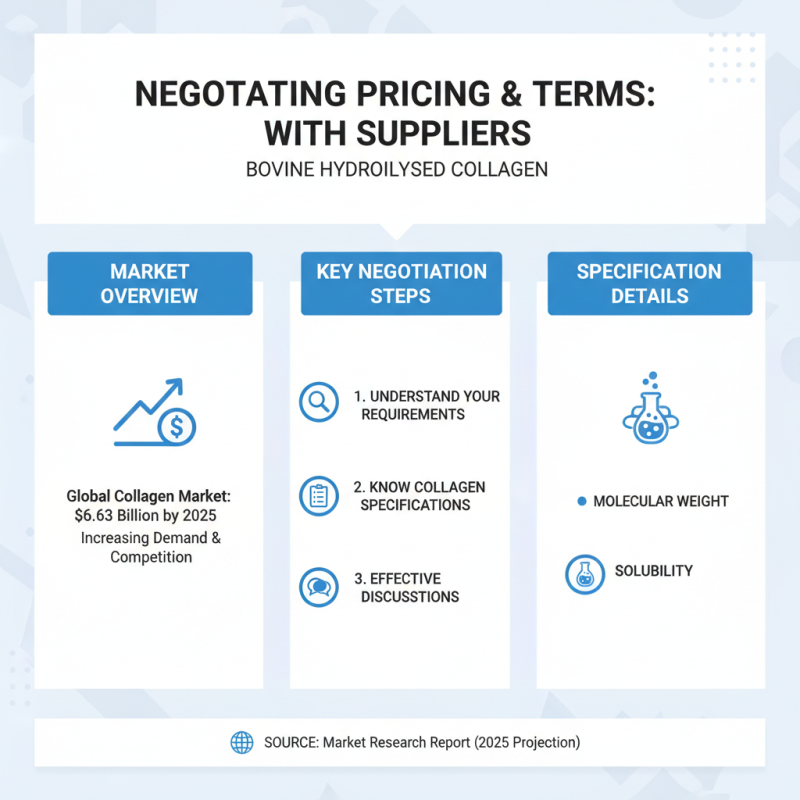
Negotiating pricing and terms with suppliers for bovine hydrolysed collagen is a key step in sourcing this valuable ingredient. The global collagen market is projected to reach $6.63 billion by 2025, according to a recent market research report. This growth highlights the increasing demand and competition for quality collagen products. When negotiating with suppliers, it’s essential to understand your requirements clearly. Know the specifications of the collagen you need, such as molecular weight and solubility. These details set the groundwork for effective discussions.
Establishing a good relationship with suppliers can lead to better pricing terms. Build rapport through clear communication and transparency about your business needs. It's not uncommon to encounter discrepancies in pricing. Some suppliers might provide lower quotes initially but lack reliable quality. Remember, quality often comes at a price. Industry experts suggest conducting quality tests before finalizing contracts. This diligence can save significant costs down the line. Also, consider diversifying your supplier base. Relying on one supplier may lead to unfavorable terms if the market shifts unexpectedly.
Be prepared to negotiate payment terms. Offering upfront payments might secure discounts but can increase cash flow risks. On the other hand, extended payment terms reduce upfront costs but may lead to higher prices. The balance is key. Analyze your cash flow projections carefully before making a decision. As you navigate these discussions, keep in mind that flexibility and open communication can yield favorable conditions for both parties.
Integrating Bovine Hydrolysed Collagen into Your Product Line
Bovine hydrolysed collagen is gaining traction in health and beauty products. It offers unique benefits for skin, joints, and digestive health. Integrating it into your product line can enhance your offerings and attract health-conscious consumers. But it's crucial to understand how to responsibly source this ingredient.
When sourcing bovine hydrolysed collagen, prioritize quality and transparency. Look for suppliers who provide third-party testing. This ensures that the collagen is pure and free from contaminants. Seek out companies that can share their sourcing practices. Knowing where the collagen comes from is vital to maintaining product integrity.
Crafting products with this ingredient can be a game changer. Consider adding it to protein powders or beauty supplements. This adds value and diversifies your range. However, it's important to ensure clear labeling and customer education. Consumers are increasingly informed. They want to know how it benefits them. Balancing quality, sourcing, and consumer education may take time, but the result will build trust in your brand.