Leave Your Message

China Top Fucoidan Manufacturer for Global Buyers?

China Top Fucoidan Manufacturer for Global Buyers? This question deserves evidence, not a polished factory photograph. Fucoidan comes from brown seaweed, yet its composition changes with species, harvest season, geography, and extraction method. Dr. M. T. Ale, a recognized marine-polysaccharide researcher, describes the ingredient clearly: “Fucoidan is a family of sulfated polysaccharides, not one uniform molecule.” That distinction matters.

The Food and Agriculture Organization’s The State of World Fisheries and Aquaculture 2024 reported approximately 36 million tonnes of algae production globally in 2022. This large supply base supports China’s seaweed-processing industry, but raw-material volume does not prove product quality. Market reports from Grand View Research and Data Bridge Market Research forecast continued Fucoidan growth, although their market estimates differ substantially. That inconsistency deserves attention.

A credible Chinese manufacturer should provide species identification, harvest origin, extraction details, batch-specific assay results, and full Certificates of Analysis. Buyers should check fucose content, sulfate content, moisture, microbiological limits, heavy metals, iodine, and residual solvents. They should also review ISO, HACCP, or GMP controls where applicable. Ask for traceability.

Not just a brochure.

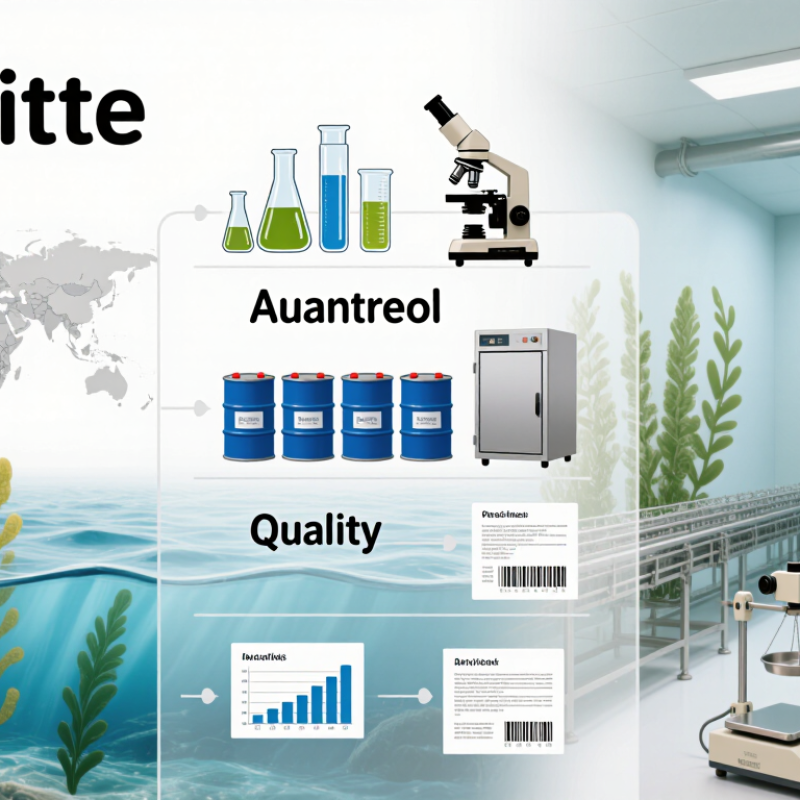
In practice, supplier audits can reveal small but important details: sealed drums, calibrated balances, clean sampling areas, and temperature-controlled storage. These details support reliability, but they do not replace independent testing. A high assay number may also hide weak transparency about molecular weight or testing methods. I would avoid declaring any company “top” without comparing documentation, consistency, capacity, and export experience. The strongest manufacturer is usually the one that answers difficult questions plainly. That standard is less glamorous, but far more useful for global buyers.

China Top Fucoidan Manufacturer for Global Buyers?

What Is Fucoidan and Why Does Its Source Matter?

China Top Fucoidan Manufacturer for Global Buyers?

Fucoidan is a sulfated polysaccharide found mainly in brown seaweeds. Its source matters because species, habitat, season, and extraction conditions change its chemical profile. Not all brown seaweed is equal. A 2023 review in Marine Drugs reported wide variations in molecular weight, sulfate content, and monosaccharide composition across fucoidan samples. These differences can affect testing, formulation, and product consistency.

The source also influences supply reliability. FAO’s The State of World Fisheries and Aquaculture 2024 reported about 36.9 million tonnes of algae production in 2022. Yet, production volume alone does not prove fucoidan quality. Seaweed harvested near polluted waters may carry excessive iodine, heavy metals, or microbial contamination. Responsible manufacturers should document cultivation areas, harvest seasons, drying methods, and traceability records.

For global buyers, a credible specification should include sulfate content, molecular-weight distribution, polysaccharide purity, moisture, ash, iodine, and heavy-metal limits. Independent laboratory testing is essential. High purity is not automatically better. The intended application still matters. Some suppliers describe fucoidan too broadly, while available research remains uneven and sometimes difficult to compare. That weakness deserves attention. A practical quality review should examine batch data, validated analytical methods, and stability results rather than relying on a single percentage claim.

How to Evaluate a Top Fucoidan Manufacturer in China

A top fucoidan manufacturer in China should offer more than attractive pricing and polished factory photos. Global buyers need clear evidence of raw material origin, processing controls, and batch consistency. Ask which seaweed species are used and whether harvesting areas are documented. Species and location can affect the final polysaccharide profile.

Request a complete specification sheet before ordering samples. It should state fucoidan content, molecular weight, sulfate level, moisture, ash, and microbial limits. Testing methods matter. Different laboratories may report different molecular weight results. A reliable manufacturer explains the method instead of hiding behind one impressive number. Independent tests for heavy metals, iodine, pesticides, and allergens can strengthen confidence.

Traceability should continue from seaweed intake to finished packaging. Review batch records, cleaning procedures, warehouse conditions, and product labeling. Verify quality certifications directly with the issuing organization. Do not accept copied certificates. A factory audit, video inspection, or third-party assessment can reveal practical details, such as sample retention and temperature control. Communication also matters. Can the technical team answer detailed questions without vague promises? A slow reply is not always a failure, but repeated inconsistencies deserve attention. I have found that many evaluations focus too heavily on price. That approach can overlook unstable supply, changing specifications, or weak documentation. A small trial order may expose problems earlier, although it cannot replace a full supplier review.

China Top Fucoidan Manufacturer for Global Buyers? - How to Evaluate a Top Fucoidan Manufacturer in China

Evaluation Dimension Practical Benchmark or Requirement Evidence to Request Why It Matters to Global Buyers
Raw-Material Species The manufacturer should clearly identify the brown-seaweed species and harvesting region. Fucoidan composition can vary significantly by species, season, and location. Scientific species name, origin statement, supplier records, harvest-season information, and raw-material traceability documents. Confirms that product specifications are linked to a consistent and legally sourced raw material.
Fucoidan Assay The specification should state the test method and whether the reported percentage refers to total fucoidan, sulfated polysaccharides, or another calculated marker. Recent third-party laboratory report, method description, calculation basis, and batch-specific certificate of analysis. Different analytical methods may produce non-comparable results; a percentage without a method is insufficient for supplier comparison.
Sulfate Content The product specification should report sulfate content using a defined analytical procedure. A commonly requested quality-control range for standardized extracts is approximately 10%–30%, but the suitable value depends on the intended formulation. Batch test results, analytical method, acceptance limits, and comparison with the approved product specification. Sulfation is an important identity and quality attribute of many fucoidan extracts.
Molecular-Weight Profile Molecular weight should be stated as a defined range or distribution rather than only “low molecular weight.” Typical commercial products may range from a few kilodaltons to several hundred kilodaltons, depending on extraction and hydrolysis. GPC/SEC or another validated molecular-weight analysis, including average molecular weight and test conditions. Molecular size affects solubility, viscosity, formulation behavior, and product positioning.
Extraction and Purification The process should describe washing, extraction, filtration, concentration, purification, drying, and solvent use. Food or supplement applications generally require controlled, documented processing. Process flow chart, HACCP plan, solvent statement, critical-process controls, and change-control procedure. Transparent processing helps buyers assess contamination risk, consistency, and regulatory suitability.
Heavy Metals Lead, arsenic, cadmium, and mercury should be tested for every relevant batch or according to a documented risk-based schedule. Limits must match the destination market and product category. ICP-MS or equivalent laboratory report showing individual results, units, detection limits, and applicable regulatory limits. Seaweed can accumulate minerals and contaminants from its growing environment.
Microbiological Quality Specifications commonly include total aerobic microbial count, yeast and mold, coliforms, Escherichia coli, Salmonella, and Staphylococcus aureus, with limits based on the intended use. Batch microbiology report, laboratory accreditation details, sampling plan, and product-specific acceptance criteria. Confirms that the powder or extract is suitable for storage, transport, and the buyer’s final product category.
Iodine and Mineral Profile Iodine should be measured when the product is intended for food, beverage, or supplement use. The acceptable level depends on formulation and local requirements. Iodine test report, full mineral profile where relevant, and risk assessment for the target market. Uncontrolled iodine levels may create formulation and labeling issues for some consumers and markets.
Pesticides and Environmental Contaminants Testing should be based on the origin, intended application, and destination-market regulations. The supplier should have a documented contaminant-control program. Multi-residue pesticide report, environmental contaminant assessment, and raw-material monitoring records. Supports import clearance and reduces the risk of non-compliance caused by marine-environment contamination.
Allergen and GMO Status The manufacturer should provide a written allergen statement and GMO statement. Cross-contact controls should be documented if the facility handles other allergenic materials. Signed declarations, cleaning validation summary, and production-line segregation information. Enables accurate labeling and customer-specific compliance review.
Quality-System Certification Look for a certification scope covering the actual manufacturing site and product category. Common systems include ISO 22000, FSSC 22000, HACCP, GMP, or equivalent programs. Current certificate, certificate scope, expiry date, issuing body, audit status, and site address. A certificate is meaningful only when it is current, verifiable, and relevant to the supplied product.
Batch-to-Batch Consistency The supplier should define release specifications for identity, assay, moisture, ash, solubility, microbiology, and contaminants. Moisture specifications are often set at or below approximately 8%–10%, depending on the product. At least three recent batch COAs, retained-sample policy, deviation records, and trend-analysis data. Multiple batch records provide a better view of manufacturing reliability than a single sample.
Third-Party Testing Independent testing should be performed by a competent laboratory, preferably one accredited to ISO/IEC 17025 for the relevant methods. Original laboratory reports, accreditation scope, sample identification, test date, and chain-of-custody information. Independent verification reduces reliance on unsupported supplier claims.
Regulatory and Export Documentation Documentation should match the destination market and intended use, such as food ingredient, dietary supplement ingredient, cosmetic ingredient, or research material. Specification sheet, SDS, product label, certificate of origin, health certificate where applicable, and export declaration documents. Correct documentation helps prevent customs delays and formulation or labeling disputes.
Solubility and Formulation Performance The supplier should provide practical data for water solubility, dispersion time, pH stability, color, odor, and compatibility with the buyer’s formulation. Application sample, laboratory protocol, storage conditions, and compatibility test results. A chemically compliant ingredient may still fail if it performs poorly in the final product.
Shelf Life and Storage A documented shelf life, commonly 24–36 months for suitably packaged dry powders, should be supported by stability data rather than only a printed date. Stability study, recommended temperature and humidity, packaging specification, and retest or expiry policy. Protects product quality during international shipping and warehouse storage.
Packaging and Shipping Protection Packaging should protect the powder from moisture, oxygen, light, and physical damage. Common commercial formats include sealed inner bags inside fiber drums or cartons. Packaging specification, food-contact declaration where applicable, palletization details, and transport conditions. Appropriate packaging reduces caking, oxidation, contamination, and transit-related losses.
Sample and Pilot-Order Process A reliable supplier should support pre-purchase samples, written specifications, pilot quantities, and approval of a reference sample before scale-up. Sample COA, sample identification, pilot-order terms, approval procedure, and retained reference sample policy. A controlled qualification process lowers the risk of receiving a different material in commercial production.
Minimum Order Quantity and Lead Time Commercial MOQ and lead time should be stated separately for standard stock, customized specifications, and private-label packaging. Actual timing depends on production capacity and export arrangements. Formal quotation, production schedule, capacity statement, payment terms, and shipment history with sensitive information redacted. Clear logistics information supports inventory planning and reduces unexpected delivery risk.
Technical and After-Sales Support The manufacturer should provide timely answers on specifications, testing, formulation, complaints, deviations, and corrective actions. Technical questionnaire responses, complaint-handling procedure, corrective-action template, and designated quality contact. Responsive quality support is essential when a product is sold across multiple jurisdictions.
Buyer qualification principle: Select a manufacturer based on verifiable batch data, documented quality systems, transparent raw-material traceability, and destination-market compliance—not on assay percentage or price alone.

China’s Fucoidan Production Process and Quality Controls

China’s fucoidan production begins with controlled seaweed sourcing, not extraction alone. Manufacturers should record species, harvest area, season, and supplier details for each incoming lot. Clean raw material matters.

At the facility, workers remove sand, shells, and visible foreign matter before repeated washing. The seaweed is then milled and processed through water-based extraction or another validated method. Temperature and extraction time require close control. Excessive heat may change the polysaccharide structure. After extraction, filtration removes insoluble particles, while concentration reduces water content under monitored conditions. Spray drying or freeze drying creates a stable powder. Each stage should have written parameters and batch records.

Quality control needs more than a single fucoidan percentage. Testing may include polysaccharide content, sulfate level, moisture, ash, microbial limits, heavy metals, and residual processing chemicals. Identity testing can support species and material verification. Retain samples allow later review when results appear unusual. Traceability should connect the finished powder to its raw-material lot and processing records. That detail is often overlooked.

No process is perfect. A clear powder can still show inconsistent composition. A high assay may not explain molecular size or biological performance. Buyers should request recent certificates, independent laboratory results, and realistic specifications. Factory audits can examine sanitation, calibration, staff training, and deviation handling. Strong documentation builds confidence, but honest reporting builds more. Slight variation is possible, and it should be investigated rather than hidden.

Certifications, Testing, and Compliance for Global Buyers

For global fucoidan buyers, certification is only the entry point. A reliable manufacturer should provide ISO 22000 food-safety certification, GMP controls, and an ISO/IEC 17025-accredited laboratory report. These documents should match the actual production site and batch number. They should not be generic files.

Testing must address both identity and safety. A current certificate of analysis should show fucoidan content, sulfate level, molecular-weight distribution, moisture, ash, and microbiological results. It should also cover arsenic, lead, cadmium, mercury, iodine, pesticides, and residual solvents. The 2024 FAO State of World Fisheries and Aquaculture report recorded about 36 million tonnes of aquatic plants produced globally in 2022. That scale makes raw-material traceability increasingly important, especially when seaweed comes from different coastal waters.

Regulatory review remains country-specific. In the United States, buyers should examine compliance with dietary-supplement cGMP requirements under 21 CFR Part 111. In Europe, the ingredient may require a Novel Food assessment, depending on its history and form. Testing methods also need scrutiny. Fucoidan has no single universally accepted assay for every source, so “purity” can be misleading without method details. Ask for sampling procedures, laboratory accreditation, detection limits, and retained-sample policies. Small gaps matter. In practice, some suppliers present valid certificates but weak batch traceability. That is a warning sign. Audits, supplier questionnaires, and independent retesting can reduce this risk, although they add time and cost.

How to Select the Right Chinese Fucoidan Supplier for Your Market

China Top Fucoidan Manufacturer for Global Buyers?

Selecting a Chinese fucoidan supplier requires more than comparing price per kilogram. Start with raw-material identity. Ask which brown seaweed species is used, where it is harvested, and how seasonal variation is controlled. An experienced supplier should explain extraction temperature, purification steps, sulfate measurement, molecular-weight testing, and yield changes. Request recent certificates of analysis for several batches, not one attractive sample. Independent testing should cover identity, heavy metals, microbiological limits, pesticides, and other contaminants relevant to your market. Traceability should reach the harvest area and production lot. Small details matter.

Tips: Compare three production batches, review audit records, and request a live quality discussion. Check whether the factory can provide stable packaging, export documents, allergen statements, and specifications in your language. Certifications can support trust, but verify their scope and validity. A polished brochure is not proof.

Your market may require different labeling, dosage language, or evidence for functional claims. Confirm these requirements with local regulatory professionals before placing a large order. Ask for a pilot shipment and monitor color, odor, solubility, assay results, and packaging condition after transit. I have learned that communication speed can be misleading; a careful supplier may ask difficult questions before quoting. That is usually healthier. No supplier is perfect, and even reliable processes need periodic testing, documented corrective actions, and honest discussion when a batch falls outside expectations.