Leave Your Message

Why Choose a Dihydromyricetin Powder Factory?

Choosing a Dihydromyricetin Powder Factory is not just a price decision. It affects how consistently a product can be identified, tested, packed, and traced. Researcher Yujie Xie co-authored a review discussing dihydromyricetin’s measurement and stability. A practical paraphrase of that work’s relevance to sourcing is: “Quality claims matter most when identity, testing, and stability can be checked.” This is a paraphrase, not a verbatim quotation.

That idea becomes tangible on a factory visit. Ask to see a recent batch certificate, the test methods behind it, and records linking the raw material to the finished powder. Check whether the supplier can explain its analytical results in plain language. Look for controlled storage, sealed packaging, and documented batch traceability. Details matter. A neat certificate alone proves little if its methods or batch references are unclear.

A capable Dihydromyricetin Powder Factory should answer practical questions without relying on impressive adjectives. Can it provide consistent specifications? How does it monitor moisture and protect material during storage? What happens when a batch falls outside its stated limits? These questions help buyers assess manufacturing discipline, not just marketing. Still, no supplier can remove every uncertainty. Product requirements differ, and factory documents need careful review. The sections ahead examine quality controls, testing, production capacity, documentation, and communication. Together, they offer a grounded way to compare suppliers and choose a partner whose claims are supported by evidence.
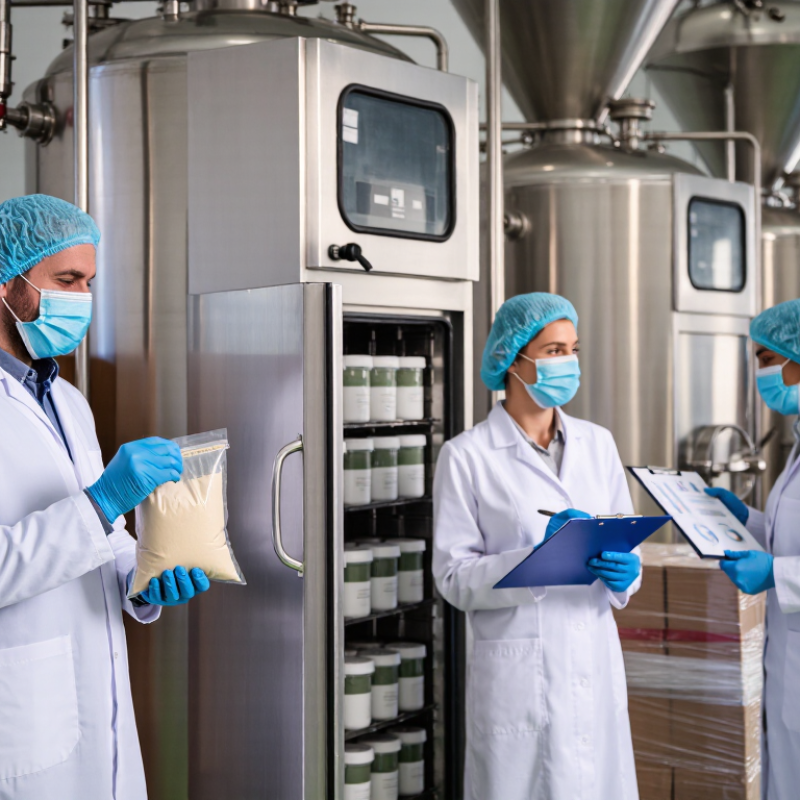
Why Choose a Dihydromyricetin Powder Factory?

Understanding Dihydromyricetin Powder and Its Common Uses

Dihydromyricetin (DHM) is a plant flavonoid found in Hovenia dulcis and other botanical sources. It is commonly handled as a measured powder for supplement formulation and laboratory research. The powder may be blended into capsules, tablets, or research preparations. Consistent particle size and assay results make handling more predictable. Small details matter.

Common uses focus on formulation and scientific study, rather than one established everyday purpose. Researchers examine DHM’s chemical properties and biological activity. Product developers may assess how it works with carriers, flavor systems, and other ingredients. Its bitter, slightly astringent taste can affect drink mixes, while moisture may cause clumping. Not always.

A useful specification should state the botanical source, assay method, moisture level, and contaminant testing. These details help buyers compare batches; appearance alone reveals little about composition. Evidence for specific health outcomes remains variable, so responsible descriptions should avoid promising prevention or treatment. The practical picture is not perfectly neat: extraction methods and testing standards can differ. A powder’s label alone cannot answer every question.

How a Dihydromyricetin Powder Factory Produces the Extract

A dihydromyricetin powder factory begins with botanical identification and incoming-material checks. Workers inspect Ampelopsis grossedentata leaves, remove foreign matter, then dry and mill them into a consistent particle size. A 2019 review in Molecules describes the plant as a rich source of dihydromyricetin, with reported leaf content approaching 30% of dry weight. That is not a guaranteed factory yield: growing conditions, harvest timing, and storage can change the starting concentration.

The milled leaves are extracted, commonly with aqueous ethanol, then filtered to separate plant solids. The liquid is concentrated under reduced pressure, helping limit heat exposure. Resin purification and crystallization can further enrich the target compound.

Small details matter. Particle size and extraction time affect how consistently the compound moves into solution.

The resulting powder is dried, blended, and tested, typically using HPLC to measure dihydromyricetin content. Quality checks may also cover moisture, microbial counts, heavy metals, and residual solvents.

A clean-looking powder proves little on its own; batch records and analytical results provide the stronger evidence. Testing can reveal variation, but it cannot erase it.

Quality Control and Testing in Dihydromyricetin Manufacturing

Choosing a dihydromyricetin powder factory means looking closely at how it checks each batch. Quality begins with the incoming plant material. Staff should document its source, inspect its condition, and verify identity before extraction. A label alone is not proof. That detail matters.

During production, controlled records can show how extraction, filtration, and drying were performed. Testing should confirm the finished powder’s identity and dihydromyricetin content using a suitable, validated analytical method, such as HPLC. Results need clear acceptance criteria, not just a number on a certificate. No single test answers everything. Moisture checks can help assess handling and storage needs, while appropriate screens for microbial contamination, heavy metals, or residual solvents depend on the material and process.

Ask how samples are collected and whether results are linked to specific batch numbers. A reliable factory can explain its sampling plan, retain records, and investigate results that fall outside specifications. It should also describe how equipment is cleaned between runs and how test instruments are calibrated. Certificates of analysis are useful, but they deserve a careful read: methods, units, dates, and limits should be clear. Paperwork can look tidy. The process behind it is what counts. Even well-designed controls have limits, so transparent explanations and corrective-action records are worth examining.

Advantages of Choosing a Specialized Dihydromyricetin Factory

A specialized dihydromyricetin factory can focus its equipment and quality checks on this ingredient. That focus may help buyers get clearer specifications and more consistent batches. Ask how the factory confirms identity, purity, and moisture levels. A batch-specific certificate of analysis is useful, but it should be supported by reliable testing records. Details matter.

Production controls also affect how a powder performs in storage and formulation. Ask about raw-material checks, batch traceability, packaging barriers, and recommended storage conditions. A tightly sealed container can help limit moisture exposure during transport and handling. No supplier can promise identical results every time; raw materials and processes can vary. Review actual records, not just polished claims.

Tips: Request a recent test report and compare its methods with your requirements. Check whether the stated particle size and purity match your intended use. If a detail is unclear, ask for clarification before ordering. A good factory should answer plainly, though its response may still need independent verification.

Why Choose a Dihydromyricetin Powder Factory? – Advantages of Choosing a Specialized Dihydromyricetin Factory

Evaluation Dimension Potential Advantage of a Specialized Factory What Buyers Should Verify
Botanical sourcing A supplier focused on dihydromyricetin may have more product-specific knowledge of its botanical source, commonly identified as Ampelopsis grossedentata, and related raw-material handling. Request the botanical name, plant-part information, origin details where available, and traceability records for the supplied lot.
Extraction and processing Dedicated experience can support consistent process controls for extraction, concentration, drying, and powder handling. A specialized focus does not, by itself, guarantee product quality. Ask for a process overview, applicable quality procedures, and evidence that manufacturing controls are monitored and documented.
Identity and assay Product-specific testing can help confirm that the material is dihydromyricetin and assess its content using an appropriate analytical method. Review a lot-specific certificate of analysis (CoA). Check the test method, result, reporting basis, and whether the method is suitable for the product.
Batch consistency A focused production program may make it easier to maintain defined specifications across lots and investigate deviations relevant to this ingredient. Compare CoAs from multiple lots and ask how out-of-specification results, change control, and batch release are managed.
Contaminant testing A well-managed supplier can establish risk-based checks for contaminants relevant to botanical ingredients and the intended market. Confirm which tests are performed, such as heavy-metal or microbiological testing where appropriate, and review the methods and lot-specific results.
Specifications and documentation A specialized supplier may be better positioned to provide ingredient-specific specifications and supporting quality documents for procurement review. Request the current specification, CoA, safety data sheet, and applicable statements. Confirm that documents match the product grade and lot.
Powder handling and packaging Experience with the ingredient can inform practical controls for packaging, storage, and protection from moisture or other conditions identified in its stability information. Check packaging materials, storage instructions, shelf-life basis, and whether stability data support the stated shelf life.
Application support Ingredient-specific knowledge may help clarify available grades, handling considerations, and documentation needs for a proposed application. Provide the intended use and destination market, then confirm that the product and documentation are suitable. Regulatory suitability depends on the application and jurisdiction.
Supply continuity A supplier with established controls for this ingredient may be able to explain its sourcing, production planning, and lot availability more clearly. Assess lead times, minimum order quantities, capacity information, and contingency arrangements directly; do not assume continuity from specialization alone.

Key Factors for Evaluating a Dihydromyricetin Powder Supplier

A reliable dihydromyricetin powder supplier should provide evidence beyond a bold purity claim. Ask for the plant’s identity, plant part, extraction details, and batch-specific certificate of analysis. The COA should report assay results and tests for heavy metals, microbes, pesticides, and residual solvents. Check that the laboratory’s ISO/IEC 17025 accreditation covers the relevant methods. A certificate alone is not enough.

Grand View Research’s 2023 Global Dietary Supplements Market report estimated the market at USD 177.5 billion in 2023, with projected annual growth of 9.1% from 2024 to 2030. This is market context, not proof of ingredient quality. Still, growing demand makes traceable sourcing and consistent testing more important. Request chromatograms or other supporting test records, and confirm that the tested lot matches the lot offered. Small details matter.

A capable factory should explain how it controls variation between batches, from incoming botanical material to finished powder. Ask how it identifies the source plant and handles out-of-specification results. Clear answers are useful; vague assurances are not. A neat certificate can still leave gaps, so review the methods and records yourself. Some suppliers may not share every process detail, but they should explain what their results mean.